Creating Your Dream Home Gym in Cambridge, Essex & London: From Spare Room to Sanctuary
Let’s be honest—when someone mentions “home gym,” most of us immediately picture that sad corner of the garage with a dusty treadmill that’s become the world’s most expensive clothes hanger. But here’s the thing: home gyms have had quite the glow-up recently, and they’re nothing like what you might expect.
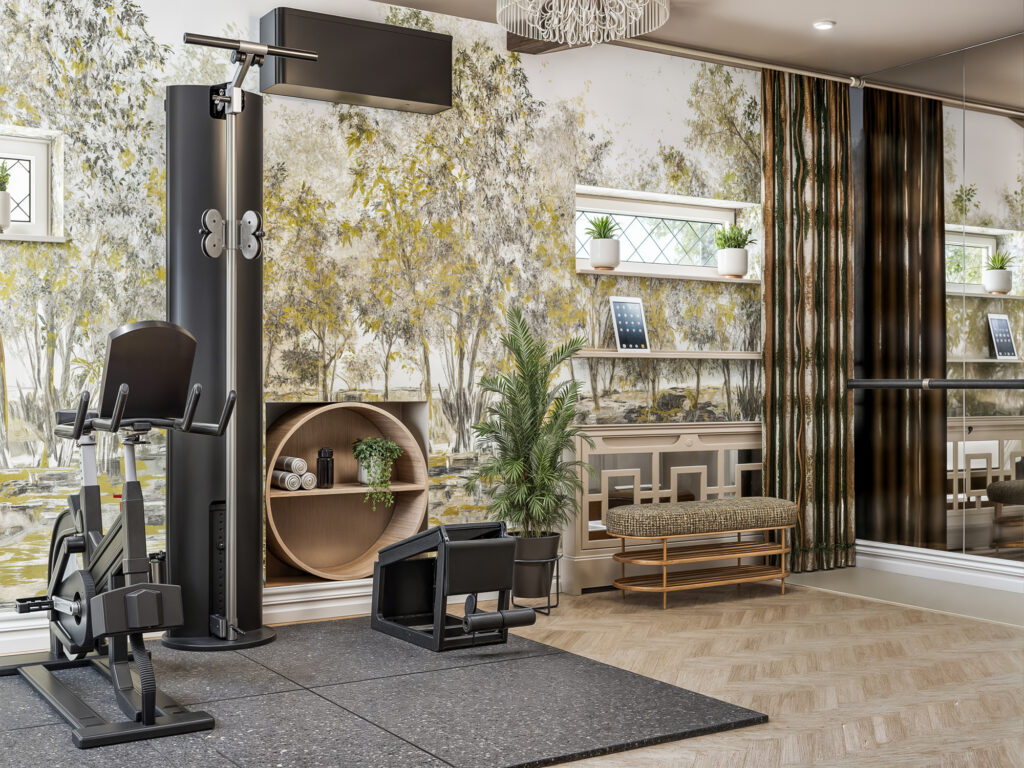
After spending the last eleven years working on various home renovation projects across Cambridge, Essex, and London (including many ambitious projects that have been testing my patience), I’ve noticed something interesting. More and more clients—from Georgian period homeowners in the country to modern flat dwellers in central London Essex—are asking about creating dedicated workout spaces that don’t look like they belong in a commercial gym from the 1980s.
And honestly? I get it. Whether you’re dealing with London’s sky-high gym membership fees, Cambridge’s limited parking near fitness centres, or simply want to avoid the commute to your local Essex gym, the idea of having your own private fitness sanctuary is pretty appealing.
Why Home Gyms Make Perfect Sense for Homeowners
The home fitness market has exploded across the UK, and it’s particularly relevant for those of us living in and around London. Think about it: no more £80+ monthly gym memberships, no battling Central Line delays to get to your workout, and definitely no competing for equipment during peak hours.
Plus, when designed properly, a home gym can actually add significant value to your property—something that’s particularly important in competitive markets like Cambridge and London where every square metre counts.
But here’s where most people get it wrong—they think creating a home gym means sacrificing style for function. Having worked on everything from converted terraces in London to garage and loft conversions in both Cambridge and Essex market towns, I can tell you: it absolutely doesn’t.
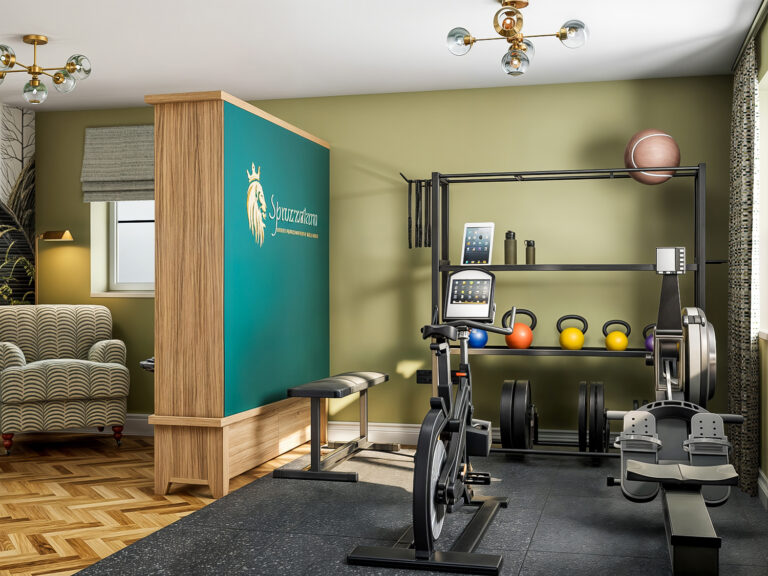
Working With Your Space: London Flats, Cambridge Terraces & Essex Family Homes
London: Making Every Square Metre Count
If you’re working with a London flat or maisonette, space is probably your biggest challenge. The key is thinking vertically and choosing equipment that serves multiple purposes.
London-Specific Solutions:
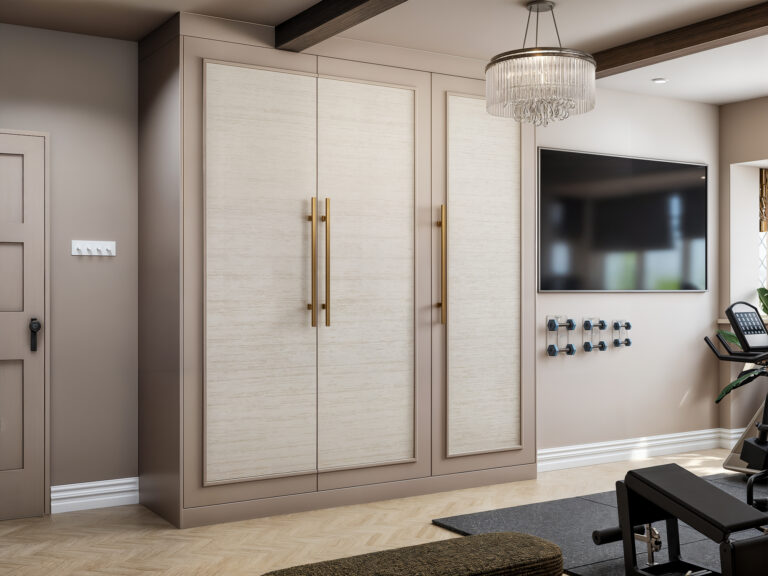
•Fold-away equipment that can be stored in built-in wardrobes;
•Wall-mounted systems that don’t eat into your precious floor space;
•Noise considerations for your downstairs neighbours (trust me, this matters more in London than anywhere else);
Cambridge: Period Property Considerations
Cambridge’s beautiful period properties—those gorgeous Georgian terraces and Victorian houses—come with their own unique opportunities and challenges. High ceilings are fantastic for overhead exercises, but you might need to work around original features like fireplaces or period windows.
Cambridge Period Property Tips:
•Basement conversions can create fantastic gym spaces (just ensure proper damp-proofing);
•Conservatory conversions work brilliantly for yoga and lighter workouts;
•Listed building considerations – always check what modifications you can make;
Essex: Space to Spread Out
Essex homeowners often have the luxury of more space, whether it’s a garage conversion in Chelmsford or a purpose-built garden room in Orpington. This opens up possibilities for larger equipment and dedicated zones.
Essex Advantages:
•Garage conversions are often more straightforward than in London;
•Garden rooms or outbuildings can create completely separate gym spaces;
•More flexibility for noise and timing of workouts;
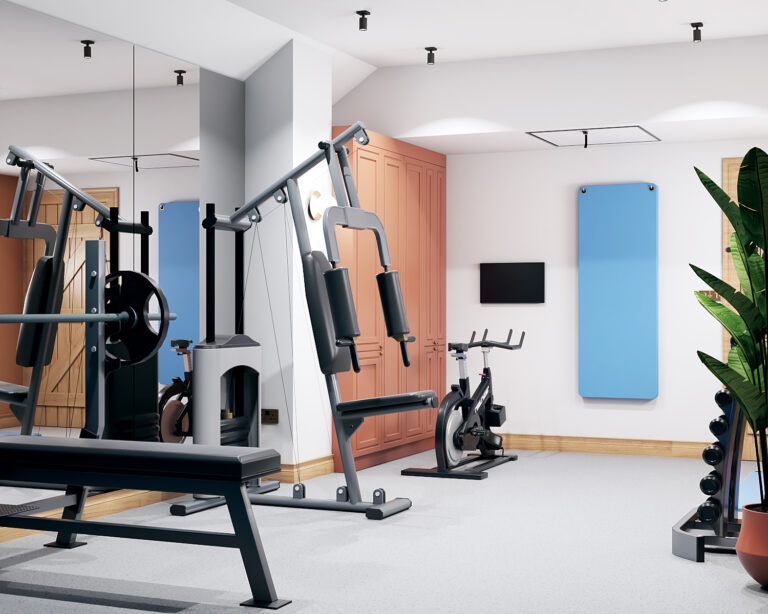
Flooring Solutions for Different Property Types
This might sound boring, but trust me—get the flooring right, and everything else falls into place. And the solution varies depending on your property type.
Victorian/Georgian Properties (Common in Cambridge & London)
These older properties often have beautiful original floors that need protection, but also potential issues with sound transmission.
Best Options:
•Interlocking rubber tiles over existing floorboards (protects originals, reduces noise)
•High-quality exercise mats for temporary setups in multi-use rooms
•Acoustic underlay if you’re in a conversion flat
Modern Properties (Essex & New London Developments)
Newer properties often have concrete floors and better sound insulation, giving you more options.
Ideal Choices:
•Permanent rubber flooring for dedicated spaces
•Luxury vinyl with cushioned backing for a more residential look
•Polished concrete for industrial-chic aesthetics (popular in converted warehouses)
Storage Solutions That Work in British Homes
Here’s where we separate the stylish home gyms from the equipment graveyards. And let’s be realistic—British homes, especially in London and Cambridge, aren’t known for their generous storage space.
Victorian Terrace Solutions
Those high ceilings and alcoves beside fireplaces? Perfect for custom storage solutions. I recently designed a home gym in a Cambridge Victorian terrace where we created a beautiful wooden storage wall that houses weights, resistance bands, and even has a hidden compartment for the less attractive equipment.
Modern Flat Storage
In newer flats, especially in Essex developments, you might have more flexibility for built-in solutions or dedicated storage rooms.
Period Property Considerations
If you’re in a listed building (common in Cambridge), you’ll need storage solutions that don’t require permanent alterations. Think beautiful wooden chests, vintage-style lockers, or furniture pieces that double as storage.
Dealing with British Weather and Lighting
Let’s talk about something uniquely British—our weather and the impact it has on home gym design.
Making the Most of Limited Natural Light
British winters mean limited daylight hours, so artificial lighting becomes crucial. I’ve found that good lighting can make the difference between a gym you love and one you avoid during those dark January mornings.
Lighting Solutions for British Homes:
•LED strip lighting behind mirrors (works brilliantly in London flats with limited windows)
•Skylights in loft conversions (popular in Essex family homes)
•Light therapy lamps for those early morning winter workouts
Ventilation in Older Properties
Victorian and Georgian properties weren’t designed with modern ventilation in mind. If you’re converting a basement in Cambridge or a period property in London, proper ventilation is crucial.
Equipment Choices for Different Budgets and Spaces
The London Budget-Conscious Approach
London property prices mean many of us are budget-conscious when it comes to home improvements. The good news? You don’t need to spend a fortune.
Essential Equipment (Under £500):
•Adjustable dumbbells (perfect for small London flats);
•Resistance bands (incredibly underrated and perfect for any space);
•Yoga mat (even if you’re not into yoga, you’ll need it for floor exercises)’
•TRX or suspension trainer (attaches to doors – perfect for renters);
The Essex Family Home Setup
With more space available, Essex homeowners can often accommodate larger equipment.
Mid-Range Setup (£500-£2000):
•Power rack or squat stand (for serious strength training);
•Adjustable bench (opens up so many exercise possibilities);
•Cardio equipment (but choose wisely—will you actually use that rowing machine?);
The Cambridge Professional Investment
Cambridge’s high property values mean home improvements often focus on adding long-term value.
Premium Setup (£2000+):
•Commercial-grade equipment that will last;
•Built-in storage solutions that integrate with period features;
•Smart home integration (popular with Cambridge’s tech professionals);
Local Considerations and Regulations
Planning Permission and Building Regulations
If you’re doing major conversions—especially in Cambridge’s conservation areas or London’s listed buildings—you might need planning permission or building regulation approval.
When You Might Need Permission:
•Garage conversions (common across all three areas);
•Basement conversions (popular in London and Cambridge);
•Garden buildings over certain sizes (more relevant in Essex);
Noise Considerations
This is particularly important in London’s dense housing and Cambridge’s terraced streets.
Consider your neighbours when planning equipment placement and workout times.
Making It Work for British Lifestyles
The Commuter-Friendly Setup
Many of my clients commute into London from Cambridge or Essex. A home gym means you can work out before catching the 7:30 am train or decompress after a long day without adding travel time.
Family-Friendly Solutions
Essex family homes often need gyms that work for multiple family members. Consider equipment that’s suitable for teenagers as well as adults, and storage that keeps everything safely out of the way.
The London Professional’s Sanctuary
For busy London professionals, a home gym often serves as a stress-relief space as much as a fitness area. Consider adding elements like plants, calming colours, and maybe even a small seating area for meditation or stretching.
Regional Supplier and Service Considerations
Local Suppliers
•London: Plenty of options but expect higher prices and delivery challenges;
•Cambridge: Good selection with easier access than central London;
•Essex: Often the best value for money with easier delivery access;
Installation Services
Factor in installation costs, especially for larger equipment. London installations often cost more due to access challenges and parking restrictions.
Investment Value Across the Region
London Property Market
In London’s competitive market, a well-designed home gym can be a significant selling point, especially in flats where outdoor space is limited.
Cambridge Market
Cambridge buyers often appreciate thoughtful use of space and period property features. A gym that respects the building’s character while adding modern functionality is ideal.
Essex Family Market
Essex buyers often look for family-friendly features. A home gym that can adapt as children grow (from play space to teen hangout to adult fitness area) adds real value.
Seasonal Considerations
Winter Workouts
British winters mean your home gym might be your primary fitness option for months. Ensure adequate heating and lighting for those dark January mornings.
Summer Flexibility
Consider how your space works in summer. Can you open it up to garden areas? Does it get too hot with south-facing windows?
Common Regional Mistakes to Avoid
London-Specific Pitfalls
•Ignoring noise regulations (especially important in conversions);
•Underestimating delivery challenges (narrow Victorian hallways, no parking);
•Forgetting about storage (every item needs a designated place);
Cambridge Considerations
•Not checking conservation area rules before making changes;
•Ignoring period property quirks (uneven floors, low doorways);
•Underestimating heating costs in older properties;
Essex Oversights
•Going too big too quickly (just because you have space doesn’t mean you need to fill it);
•Forgetting about planning permission for larger garden buildings;
•Not considering family growth (what works now might not work in five years);
The Reality Check: Will You Actually Use It?
Before you start planning your dream home gym, have an honest conversation with yourself about your workout habits. If you’ve never been consistent with exercise, a home gym won’t magically change that. But if you’re someone who struggles with London’s crowded gyms, Cambridge’s limited parking, or simply prefers privacy, a well-designed home gym could be exactly what you need.
Final Thoughts
Creating a home gym that works for your space, budget, and lifestyle is absolutely possible, whether you’re in a London flat, Cambridge terrace, or Essex family home. The key is thinking beyond just the equipment and considering the entire experience—and how it fits into your regional context.
And who knows? You might even find yourself looking forward to your workouts instead of dreading the commute to the gym. Stranger things have happened.
Ready to transform your Cambridge, Essex, or London home into a stylish fitness sanctuary? Get in touch to discuss how we can create a home gym that perfectly fits your property and lifestyle.