Is Circadian Rhythm Lighting Worth the Investment for Your Home?
Lighting is the single most powerful tool in interior design, and it is the one we most consistently underestimate. We will spend weeks deliberating over the perfect shade of paint and invest significant sums in a beautifully crafted sofa, yet the quality of light that fills our homes often remains an afterthought. This is beginning to change. As wellness moves from a niche interest to a central component of modern life, a crucial question is emerging in the design conversation: is it worth investing in a smart lighting system that supports your circadian rhythm?
Having researched this topic and seen its impact in the spaces I design, my answer is a considered yes—with some important nuances. The science is compelling, the technology is maturing at a remarkable pace, and the impact on daily life can be quietly transformative. In this article, we will explore the biology behind circadian rhythm lighting, what a human-centric system actually involves, and how to think about the investment, whether you are considering a whole-home installation or a more accessible first step.

What Is Circadian Rhythm, and Why Is It So Easily Disrupted?
Your circadian rhythm is your body’s internal 24-hour clock, a deeply ingrained biological process that governs everything from your sleep-wake cycles to hormone production, metabolism, and mood . For millennia, this internal clock was set and maintained by the most reliable timekeeper available: the sun. The natural progression of daylight—cool, bright, and energising in the morning; warm, soft, and calming as evening approaches—provided the essential cues our bodies needed to function optimally.
Modern life has changed this fundamental connection. We spend, on average, 90% of our time indoors, bathed in static, artificial light that bears little resemblance to the dynamic quality of natural daylight . Worse, our evenings are flooded with blue-wavelength light from screens, tablets, and energy-efficient bulbs. This constant exposure to the wrong kind of light at the wrong time creates a state of what researchers call “circadian disruption.”
This disruption is not a trivial matter. Exposure to light, particularly blue light, in the hours before bedtime powerfully suppresses the secretion of melatonin, the hormone that signals to our bodies that it is time to sleep . The consequences, as documented by institutions like Harvard Medical School, are significant and include poor sleep quality, daytime fatigue, and mood disturbances. Over the long term, chronic circadian disruption has been linked to an increased risk of more serious health conditions, including heart disease, diabetes, and obesity .
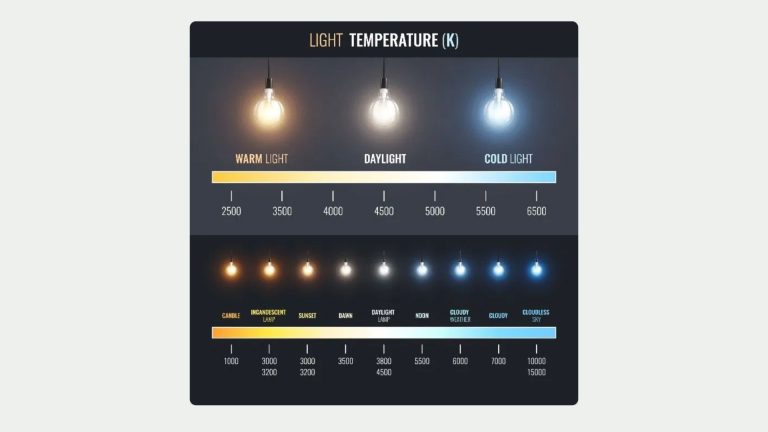
The Science of Light: How Colour Temperature Affects Your Body
To understand how circadian lighting works, it is essential to grasp two key concepts: colour temperature and its effect on our hormones.
Light is measured on a spectrum of colour temperature, expressed in Kelvin (K). This is not about heat, but about the visual warmth or coolness of a light source.
•Warm Light (2700K–3000K): This is the amber, golden light of sunrise, sunset, and candlelight. It is calming and has a low proportion of blue wavelengths. It allows melatonin production, naturally preparing the body for sleep and reduces cortisol, promoting relaxation.
•Cool Light (4000K–6500K):_ This is the bright, blue-enriched light of midday sun. It is energising and promotes alertness, suppresses Melatonin, stimulates cortisol,
When we sit under static 4000K office lighting until 6 p.m. and then stare at a blue-light-emitting phone until bedtime,
we are sending our bodies a constant stream of “daytime” signals, effectively telling our brains to stay alert and suppressing
the natural hormonal processes that should be preparing us for rest.

What Is Circadian Rhythm Lighting, and How Does It Work?
Circadian rhythm lighting—also known as human-centric lighting (HCL) or tunable white lighting—is a smart lighting system designed to solve this problem. It automatically mimics the natural progression of daylight within the home, changing its colour temperature and intensity throughout the day.
In the morning, the system delivers cool, blue-enriched light to help you wake up and feel energised. Through the afternoon, it shifts to a more neutral, balanced tone to support productivity. As evening approaches, it transitions to a warm, amber-toned light that eliminates blue wavelengths, allowing your body’s natural melatonin production to begin, thus preparing you for a restful night’s sleep.
The entire process is typically automated, requiring no daily input from the homeowner. A well-designed system is a ‘set it and forget it’ solution that works quietly and invisibly in the background to support your body’s natural biology.
The Investment: What Are Your Options in the UK?
This is where the conversation becomes practical, because “circadian rhythm lighting” is not a single product but a spectrum of solutions. The right choice for you will depend on your budget, your property, and whether you are renovating or simply upgrading.
Level 1: The Accessible Entry Point (DIY)
For those new to the concept, starting with individual smart bulbs is an excellent and cost-effective way to experience the benefits. These are products you can install yourself in existing lamps and fixtures.
•What to look for: Choose bulbs specifically marketed as “tunable white,” “white ambiance,” or “warm-to-cool white.” Avoid simple “dimmable” or “colour” bulbs, as these may not offer the full range of white temperatures needed.
Key Brands:
•Philips Hue White Ambiance: The market leader, offering a wide range of bulb types (E27, GU10, E14) and a user-friendly app. A starter kit with a few bulbs and the required Hue Bridge typically costs between £100 and £200.
•LIFX White to Warm: A strong competitor that does not require a separate hub, connecting directly to your Wi-Fi. A two-pack of E27 bulbs costs around £50-£60.
•Best for: Renters, those on a smaller budget, or anyone wanting to test the concept in a single room, such as the bedroom or home office.
Level 2: The Mid-Range Integrated System
This level involves a more planned approach, often covering multiple rooms or an entire floor. It typically requires professional installation and offers a more seamless experience than a collection of individual bulbs.
•What it involves: This could be a professionally installed system using smart switches, dimmers, and downlights that are all designed to work together. Brands like Casambi offer flexible, wireless control modules that can be integrated with a wide range of light fittings.
•Estimated Cost: According to CEDIA, the Custom Electronic Design and Installation Association, a mid-range smart lighting system for a few rooms typically falls between £1,000 and £5,000 . This would include the hardware and professional installation.
•Best for: Homeowners undertaking a significant renovation or new build, or those who want a more robust and unified system without the premium price tag of a high-end solution.
Level 3: The High-End, Whole-Home Solution
This is the pinnacle of human-centric lighting, offering a fully automated, dynamic experience that is seamlessly integrated into the architecture of your home.
•What it involves: These are sophisticated, professionally designed and installed systems that control all lighting circuits in the home. They often integrate with other smart home features like motorised blinds, which can be programmed to open and close to maximise natural daylight.
Key Brands:
•Lutron (Ketra): Widely regarded as the gold standard in residential lighting control. Lutron’s Ketra system offers an unparalleled quality of light, with the ability to produce a vast spectrum of colours and white light that precisely mimics the sun’s natural arc. It is a closed system, meaning all components are from Lutron, ensuring flawless performance.
•Estimated Cost: A high-end, whole-home system from a brand like Lutron can range from £10,000 to £50,000+, depending on the size of the property and the complexity of the installation .
•Best for: Homeowners who are building a new home or undertaking a complete gut renovation, and for whom wellness and the highest quality of light are top priorities.
The Verdict: Is It a Worthwhile Investment?
As an interior designer, I view circadian rhythm lighting not as a gadget, but as a fundamental component of a healthy home environment. The decision of whether to invest, and at what level, depends on your personal circumstances. Here is how I would frame the decision:
If your answer to the questions below is yes:
“Do you or your family members struggle with sleep, or often feel tired during the day?”
The biological benefits of aligning your light exposure with your natural sleep-wake cycle are significant and well-documented.
Starting even with entry-level smart bulbs in the bedroom could make a noticeable difference.
“Do you work from home?”
Creating a home office environment with cool, energising light during the day and warm, relaxing light in the evening can have
a major impact on both your productivity and your ability to switch off at the end of the day.
“Are you planning a renovation or new build?”
This is the ideal time to consider a mid-range or high-end integrated system.
The cost of wiring and installation is far more efficient when done as part of a larger project, and it will add significant
long-term value and wellness benefits to your home.
“Do you value technology that enhances well-being without requiring constant attention?”
The beauty of a well-designed circadian lighting system is that it is automated. It works for you, quietly in the background,
without you needing to think about it.
Ultimately, the value of circadian lighting lies in the quiet, cumulative benefits it provides: a better night’s sleep, more energised mornings, calmer evenings, and a home that feels more naturally in tune with your body’s needs. It is an investment in your well-being, and from that perspective, it is one of the most valuable you can make in your home.
If you would like to discuss how human-centric lighting could be integrated into your own home—whether as part of a broader renovation or as a focused upgrade—we would be delighted to talk it through.