Lighting ideas for a warmer home this autumn
As the evenings draw in and natural light fades earlier, a home reveals the quality of its lighting scheme very quickly. Rooms that felt perfectly adequate during the summer can suddenly feel flat, over-bright or strangely dark. A single ceiling pendant is switched on, the whole room is illuminated—and yet none of it feels quite right.
The answer is rarely simply to buy another lamp. The most beautiful homes are shaped by layered lighting: a considered mix of light sources that supports the way you move, work, relax and spend time. It is one of the most transformative parts of an interior, and one that deserves attention long before the final decorative details are chosen.
At Katie Malik Design Studio, we think of lighting as part of the architecture of a home. It is not an afterthought or a finishing touch. It is a way of creating warmth, drawing the eye, making a room work harder and, most importantly, shaping how a space makes you feel.
Here are the lighting ideas we return to when creating homes that feel welcoming, elegant and genuinely enjoyable to live in throughout autumn and winter.

Start with layers, not one “big light” or “downlights”
A successful lighting scheme does not depend on one source doing everything. It is built in layers, with each layer doing a slightly different job.
Ambient light: the atmosphere
Ambient light is the gentle, overall glow that makes a room feel comfortable to be in. It may come from carefully positioned ceiling lights, wall lights, floor lamps, concealed LED details or reflected light from another surface. It should make it easy to move through a room without creating harsh shadows or making the space feel clinical.
Task light: the practical help
Task lighting supports the activities that happen in a room. Think of a reading light next to an armchair, well-directed light over a kitchen worktop, or well considered illumination at a desk. The key is that the light is there when it is needed, without overwhelming the rest of the room.
Accent light: the quiet magic
Accent lighting brings depth and focus. It might pick out a favourite painting, wash gently across a textured wall, illuminate a bookcase or make a beautiful piece of joinery feel even more special after dark. It is often the detail that turns a well-furnished room into one with genuine atmosphere.
When these layers work together, the room can adapt. It can be bright and practical for a busy morning, softer for a quiet evening, or warm and inviting when friends arrive for supper. That flexibility is the real luxury.
Think about how the room lives after dark
The best lighting ideas begin with a simple question: what happens here in the evening? A room is not a showroom. It has rhythms, rituals and people moving through it. The lighting should always respond to them.
Create a welcoming arrival in hallways and corridors
Hallways and corridors are often treated as purely functional routes from one room to another, but they set the tone for the whole home. In the darker months, they are also the first place you experience when you return at the end of the day.
Rather than relying on one bright central fitting, consider a softer ‘sequence’ of light. Wall lights can make a narrow corridor feel more generous; a low glow near joinery or a console can add depth; and carefully directed light can celebrate artwork, texture or a beautiful architectural detail. Good corridor lighting should guide you through the home without feeling like an airport runway.
Give the dining table its own moment
Lighting over a dining table should be practical enough for a meal, but it also has the power to make the table feel like an occasion. The scale, height and quality of the fitting all matter—as does the light around it.
A pendant or chandelier works best when it is part of a wider scheme rather than the only source in the room. Add background light to the walls, cabinetry or a nearby artwork, and the table becomes the centre of attention without being isolated in a dark space. Dimming is particularly valuable here: lunch with family, homework at the table and an evening dinner party all need a different atmosphere.
Do not forget the home office
Home-working has made many of us more aware of the spaces that support focus and comfort. In a home office, task lighting should reduce strain and help you work clearly, but it should still feel part of your home rather than a temporary corner of it.
A well-positioned desk light, controlled ambient light and gentle illumination around shelving or joinery can make even a compact workspace feel purposeful. Consider the position of screens and windows too, so that glare does not become a daily frustration.
Let bespoke joinery glow, rather than glare
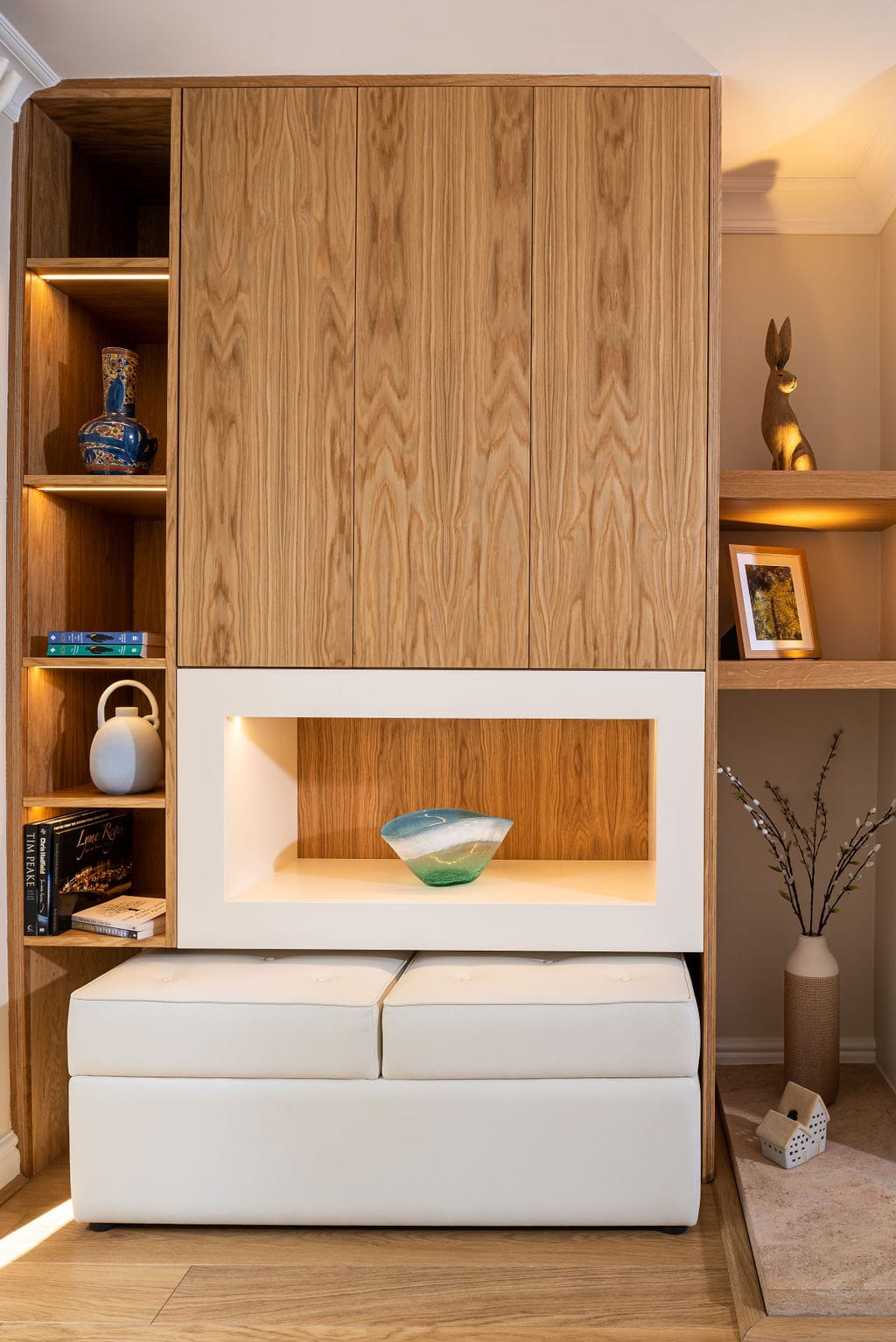
One of the most effective uses of accent lighting is within or around bespoke joinery. Integrated light can bring a quiet sense of depth to bookcases, display shelves, cabinetry and dressing areas. It allows treasured objects, books and materials to be seen differently in the evening—and gives the room another layer of character.
The key is actually restraint. The aim is not to light every shelf as if it were a shop display. A warm, subtle glow can be far more luxurious than a bright strip of exposed light. It is the same principle we apply throughout a scheme: let the lighting support the design rather than shout over it.
Plan lighting early in a renovation
Many homeowners start thinking seriously about lighting once ceilings have been opened, electrical points have been fixed or joinery is already being made. By then, some of the most valuable choices have become difficult or expensive to change (never impossible though).
A considered lighting plan should begin early, alongside the layout, furniture plan and wider interior architecture. It needs to account for more than where a pendant will hang. We look at how a room will be furnished, where a bed or dining table will sit, which walls might hold art, how window treatments will work, where joinery is planned and how people will move through the space.
This early thinking allows the practical elements to be resolved beautifully: switch locations, lighting circuits, dimming, socket positions, drivers for concealed lighting and the small technical details that make a final scheme feel effortless.
It also helps protect the investment in your home. A beautiful sofa deserves enough light to be enjoyed. Bespoke cabinetry should be planned with its illumination in mind. And a carefully selected piece of art is much more powerful when it can be appreciated after sunset.
A useful rule of thumb: if a lighting decision affects wiring, ceiling details, joinery, window treatments or the furniture plan, it is not a final-decoration decision. It belongs in the early design conversation.
Warmth is about more than colour temperature
People often ask which bulb or colour temperature is “best” for a home. There is no one answer, because the right light depends on the materials, the amount of daylight, the activity in the room and the atmosphere you are trying to create. The rule of thumb, however, for domestic spaces, is not to go with more than 3000k; the ideal is 2700k.
In living spaces and bedrooms, we often lean towards warmer light because it is more forgiving on natural materials, upholstery and skin tone, and it supports a more restful feeling in the evening. Kitchens, dressing spaces and work areas may need clearer task light, but that does not mean they have to feel cold.
What matters most is consistency and control. Avoid mixing noticeably different whites in the same sightline. Choose high-quality fittings and lamps that render colours honestly. Use dimming where it will make a real difference. And always consider what the light is doing to the surfaces around it: stone, timber, fabric, paint and metal all respond in their own way.
Light for the feeling you want to create
At KMDS, our approach is rooted in the belief that a home should support health, happiness, aesthetics and the way its owners want to live. Lighting is central to that. It can make a high-ceilinged room feel intimate, bring calm to a bedroom, create a sense of arrival in a hall or make an ordinary weekday dinner feel a little more special.
This is why we do not begin with a list of fittings. We begin with the people who live in the home. Do you like to read in the evening? Do you host large family meals? Do you need a peaceful place to work? Do you want your home to feel calm when you walk through the door? The answers shape the design.
Autumn is a wonderful time to notice what is missing. As the evenings become longer, pay attention to the rooms you naturally avoid after dark, the corners that feel flat and the places where the light makes you pause. Those observations are often the beginning of a far more considered home.
Planning a lighting scheme for your home?
Whether you are beginning a full renovation, furnishing a new home or simply rethinking a room that does not feel right in the evening, thoughtful lighting can make a remarkable difference.
At Katie Malik Design Studio, we create high-end residential interiors across Home counties, considering every layer of a home—from spatial planning and interior architecture to furniture, fittings and final styling.
For more practical inspiration, download our guide to creating a designer look with lighting — simply click on the ‘How to create a designer look with lighting’ icon below.