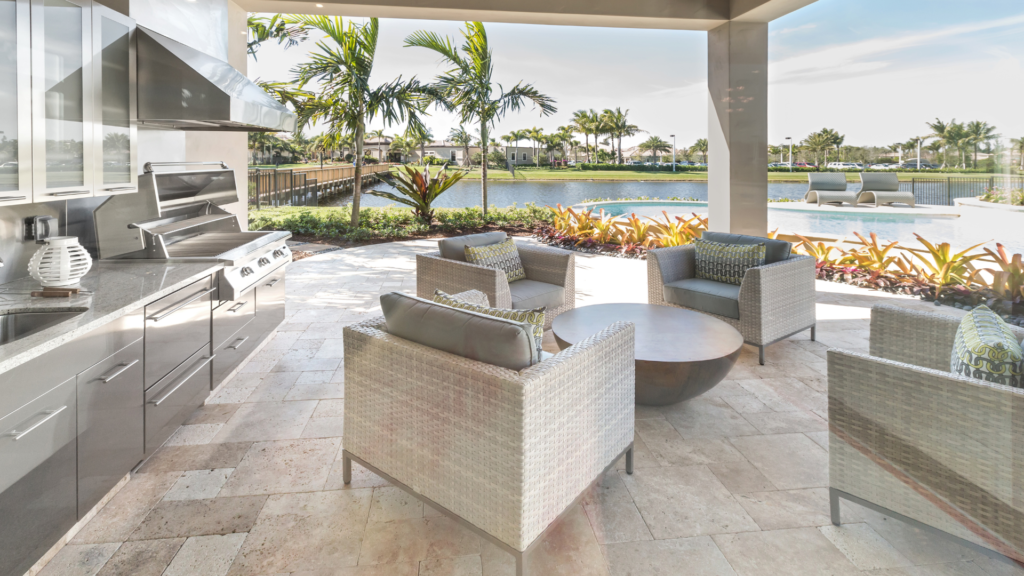
Al Fresco dining- a guide to a perfect outdoor kitchen
As the sun finally graces us with its presence, our minds naturally drift to the allure of summer evenings spent dining al fresco. While the sizzle of a BBQ holds its charm, there’s something truly captivating about the idea of a fully equipped outdoor kitchen, reminiscent of those seen in the pages of lifestyle magazines.
But before you brush off the notion as a luxury reserved for celebrities and culinary maestros, let’s delve deeper. Recent research suggests that outdoor kitchens have firmly cemented their place among the UK’s most sought-after home improvement projects, ranking alongside window replacements and roof repairs.
The surge in popularity can be traced back to our experiences during lockdown, where the allure of outdoor living became more apparent than ever. A report by the Hearth, Patio & Barbecue Association revealed an 18% increase in outdoor kitchen sales in 2020 alone, reflecting a growing appreciation for blending indoor comforts with the great outdoors.

Despite Britain’s notorious weather, there’s an undeniable appeal to cooking and socialising amidst the open air. But beyond the idyllic imagery, outdoor kitchens offer a pragmatic solution for expanding your living space. With the right design and amenities, they become the nucleus of outdoor living, seamlessly blending functionality with style.
The convenience of having all your culinary needs at arm’s reach during alfresco gatherings is very appealing. No more running back and forth between indoor and outdoor spaces; everything from meal prep to serving drinks can be accomplished in one central hub of an outdoor kitchen.
Similarly to designing an interior space, we must choose the perfect location, incorporating essential utilities and must-have features.
When envisioning your dream outdoor kitchen, it’s easy to get lost in the excitement of luxurious designs and gourmet cooking possibilities. However, before diving headfirst into design catalogues and appliance selections, it’s crucial to lay a solid foundation that seamlessly integrates style with functionality.
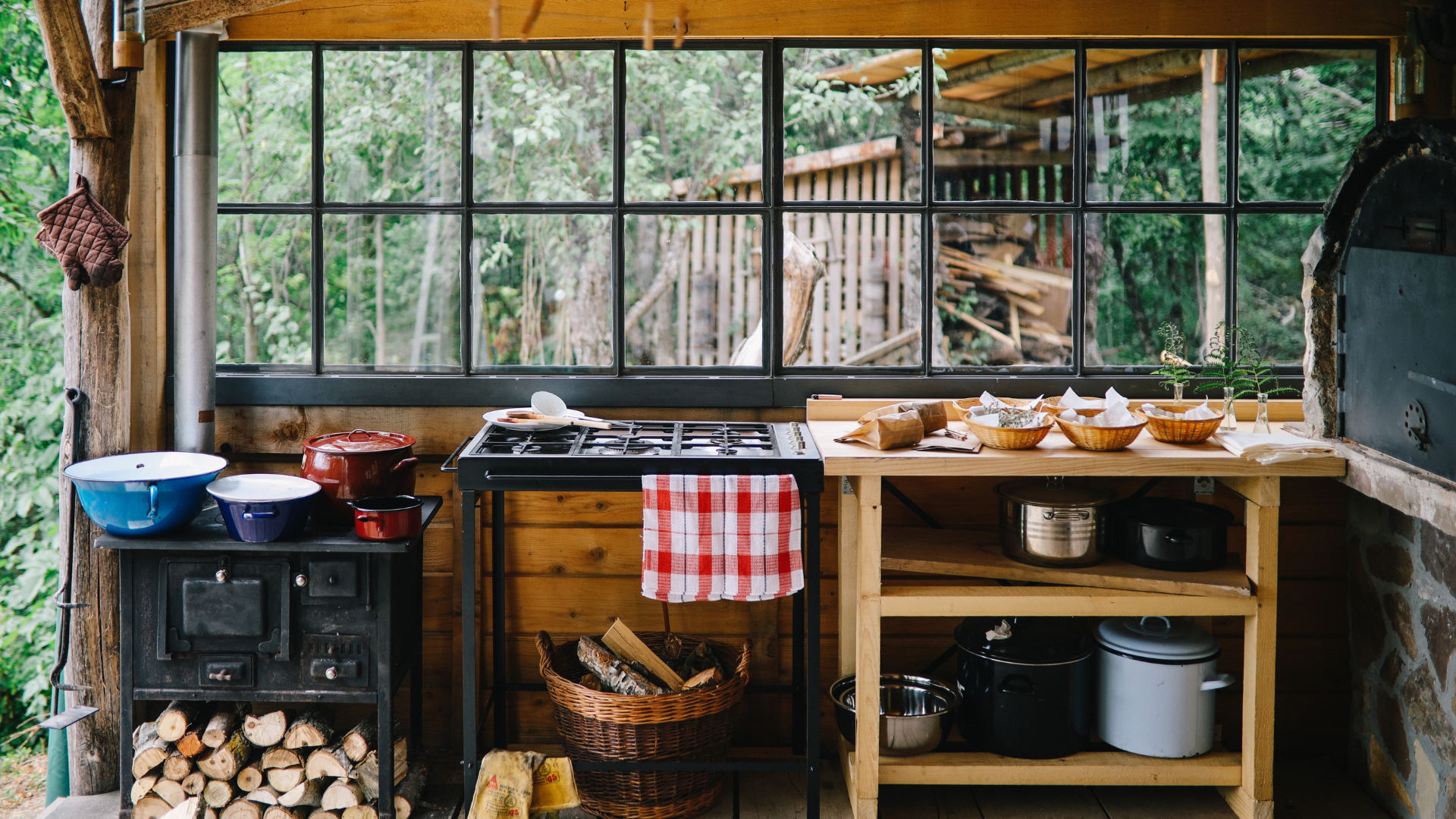
The picture above shows a very simple, rustic arrangement for an outdoor kitchen.
The first step in designing your outdoor culinary oasis is choosing the ideal location within your garden. Take cues from the existing layout and design of your outdoor space, identifying natural focal points or areas framed by lush vegetation or architectural features. These picturesque settings not only enhance the visual appeal of your outdoor kitchen but also create a seamless transition between indoor and outdoor living.
Proximity to your indoor space is another key consideration. Placing your outdoor kitchen close to the house streamlines the flow of food and supplies during outdoor entertaining, while a more secluded location at the garden’s far end offers a more peaceful retreat.
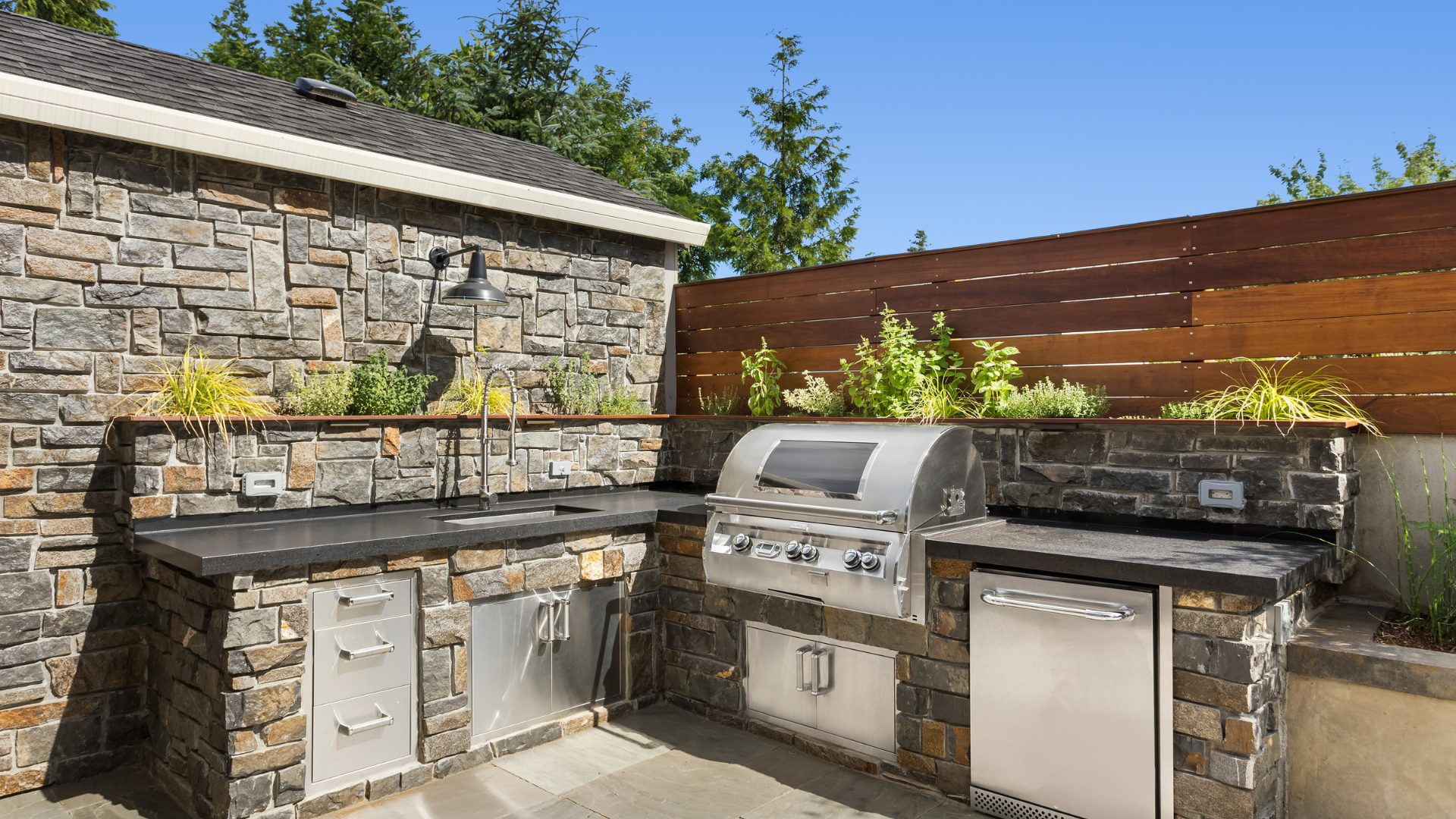
While stainless steel is a very popular choice for outdoor kitchens, it can look clinical. It’s best to combine it with wood, ceramic and textured bricks to bring more character and warmth.
Protection from the elements is essential for ensuring year-round enjoyment of your outdoor kitchen. Whether nestled against a protective wall, sheltered under a permanent structure, or strategically positioned to maximise sunlight and scenic views, careful planning ensures that your outdoor cooking haven remains a welcoming space, regardless of the weather.
Beyond aesthetics, the success of your outdoor kitchen depends on attention to technical details. From electricity and gas to water and waste drainage, each utility plays a crucial role in creating a functional and safe outdoor cooking environment.
Electricity, for instance, requires careful installation of armoured cables buried at the proper depth to prevent damage, along with waterproof and RCD-protected outdoor sockets. Gas mains should be installed by certified professionals to ensure compliance with safety regulations, while incorporating a sink adds both convenience and complexity, requiring thoughtful planning to prevent freezing and ensure proper drainage.
Ventilation is another often-overlooked aspect of outdoor kitchen design, yet it’s essential for maintaining a safe and comfortable cooking environment. Adequate airflow prevents the buildup of harmful gases, while heat-retardant materials and proper distances from combustible items further enhance safety.
By carefully balancing style with functionality and paying meticulous attention to technical considerations, you can create an outdoor kitchen that not only reflects your design aesthetic but also elevates your outdoor living experience.

If you’d like to discuss designing your dream outdoor kitchen, click here to book your complimentary project consultation.